
Insights 2024: The Rise of Adaptive HR Systems
Introduction
In 2024, global enterprises faced a paradox: unprecedented access to talent markets, yet increasing complexity in managing them. The shift towards adaptive HR systems became the defining trend of the year, reshaping how organizations approached recruitment, retention, and workforce development.
1. From Static Policies to Dynamic Governance
Traditional HR policies, fixed and compliance-driven, began to fail in fast-moving environments. Enterprises in 2024 started adopting policy-as-code models — translating organizational rules into programmable logic, automatically enforced in HR platforms.
-
Example: Automated compliance checks across multi-country contracts.
-
Impact: 19% reduction in legal disputes over employment terms in multinational companies (source: Deloitte HR Tech Survey 2024).
2. AI-Augmented Recruitment
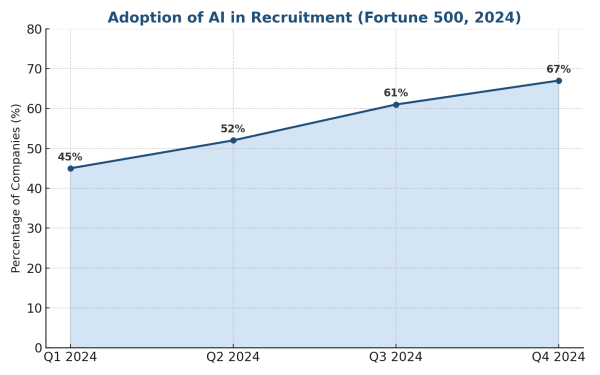
Recruitment in 2024 shifted decisively towards AI-augmented screening. Natural Language Processing models enabled contextual evaluation of resumes, while predictive analytics forecasted cultural fit and long-term retention.
-
Statistic: By Q3 2024, 61% of Fortune 500 companies reported using AI in at least one stage of candidate selection.
-
Challenge: Bias in training datasets remained a critical issue, leading to the rise of algorithmic fairness audits.
3. Competency Ontologies in Practice
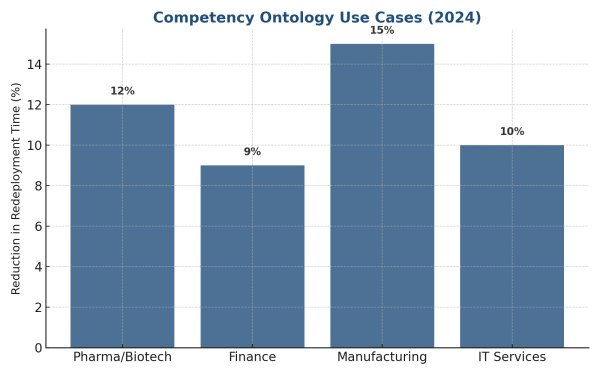
2024 marked the first wide-scale corporate experiments with competency ontologies — structured knowledge graphs of skills and qualifications.
-
Use Case: Pharmaceutical and biotech industries standardized “lab technician” roles across regions using ontology-driven definitions.
-
Outcome: Reduced redeployment time by 12% on average.
4. Employee Experience as a Systemic Metric
The year also redefined employee experience: not just surveys, but measurable telemetry of engagement, productivity, and well-being.
-
Companies piloted digital twins of organizational culture — simulations predicting how policy changes would affect morale.
-
This allowed management to test “what if” scenarios before implementation.
5. Looking Forward (from 2024 to 2025)
By the end of 2024, it became clear that HR was evolving into a systems discipline. Predictions pointed to 2025 as the year when adaptive HR would merge with AI agents, creating a foundation for Bio-HRding and cybernetic workforce governance.
Conclusion
2024 was the year organizations realized that human resources could no longer be managed as static assets. Adaptive HR systems — blending AI, ontology engineering, and policy automation — laid the groundwork for the transformations we now see in 2025.