
Productivity, Wage Inequality, and Growth Elasticities: An Advanced Analysis of Dubai's Labor Market
By CEO, Alexandra
Introduction
In recent years, Dubai has become a laboratory of economic diversification, where labor structure, productivity, and wage inequality are being reshaped under the impact of globalization, migration, and technological change. This article examines labor elasticities, productivity dynamics, income distribution, and structural barriers to sustainable growth.
1. Labor Productivity and Its Dynamics
-
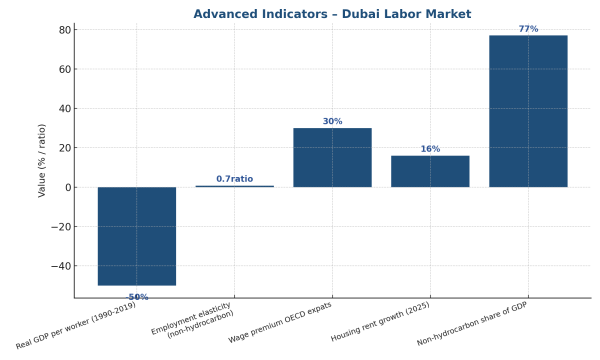
Studies show that from 1990 to 2019, real GDP per workforce participant in the UAE fell by about half, indicating a sharp drop in average worker productivity.
-
Reports from the UAE Central Bank highlight that GDP growth, especially in non-hydrocarbon sectors, is not always aligned with enterprise-level productivity growth.
-
The ILO notes chronically low productivity elasticity in Arab states: GDP growth is largely driven by employment and capital expansion, not productivity.
2. Growth and Employment Elasticities
-
World Bank data shows employment-output elasticity often <1 in emerging markets, meaning GDP growth doesn’t translate proportionally into jobs.
-
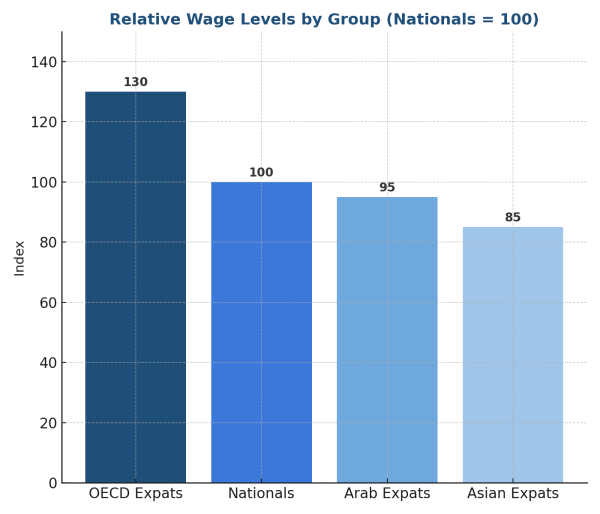
Research highlights wage and employment gaps: OECD expatriates are hired faster and at higher salaries, while nationals have lower short-term employment elasticity.
3. Wage Inequality and Demographic Impact
-
Private sector wage inequality is significant: OECD expatriates receive wage premiums of +20–40% compared to nationals and other expat groups.
-
Meanwhile, mid-level wages stagnated in 2025, while cost of living rose sharply (+16% rental prices).
4. Economic Structure and Growth Sectors
-
Dubai’s GDP is diversified: trade (26%), logistics (12%), finance (10%), manufacturing (9%), real estate (7%), construction (6%), tourism (5%), others (25%).
-
Non-hydrocarbon sectors dominate growth, creating demand for high-skill professionals in finance, logistics, and tourism.
5. Institutional Barriers
-
Barriers include: lack of recognition of foreign qualifications, opaque wage structures, heavy reliance on migrant labor, and soaring housing costs eating into real wages.
-
Productivity measurement methods remain underdeveloped in SMEs, and digital/AI adoption is slow compared to potential.
6. Conclusions and Policy Recommendations
-
Raise Total Factor Productivity (TFP) — technology, processes, and management, not just labor and capital.
-
Reform compensation systems with pay-for-performance and transparent wage structures.
-
Address housing costs via employer allowances and subsidies.
-
Invest in education and certification in digital and AI skills to reduce gaps.
-
Improve labor productivity measurement (per-hour, TFP, elasticity monitoring).